Home / Articles
Breast Augmentation Seoul 2026: Complete Guide for US Patients
Home / Articles
Breast Augmentation Seoul 2026: Complete Guide for US Patients
If you are researching breast augmentation, you have likely encountered overwhelming information. Local surgeons in major US cities quote prices between $12,000 and $18,000 for the surgery alone. Recovery timelines seem unclear. Before and after results vary dramatically. And you are uncertain whether seeking surgery abroad is genuinely safer than staying in the US, or whether it is simply a budget conscious compromise on quality. The confusion stops here.
By the end of this comprehensive guide, you will understand exactly what breast augmentation Seoul involves, what the procedure costs from start to finish, what realistic recovery looks like week by week, what results you can expect on a petite or athletic frame, how Dite Plastic Surgery Clinic's approach differs from competitors, and how to book your consultation with confidence. This is not a sales pitch. This is the research level detail you need to make an informed decision.
Dr. Jun Wook Lee, the lead surgeon at Dite Plastic Surgery Clinic, is a board certified plastic surgeon with more than 20 years of experience and over 400 breast augmentation procedures performed annually. He holds adjunct professor and clinical instructor positions at Samsung Hospital and is an active member of the Korean Society of Plastic and Reconstructive Surgery and multiple international plastic surgery societies. His expertise, combined with Dite's body focused specialization and global academic leadership, has made the clinic a destination for discerning patients from across North America.
The fundamental question most American patients ask is straightforward: Is Seoul actually better quality than the US, or am I just getting a discount? The answer requires honest comparison across three dimensions: clinical expertise, cost structure, and academic innovation.
Seoul's global reputation stems from decades of specialization and massive surgical volume. Korean plastic surgeons perform more breast augmentations in a year than many US surgeons do in a decade. This is not hyperbole. It is a direct reflection of market demand, patient preference, and the concentration of expertise in a city that has become the aesthetic surgery capital of the world.
Board certified standards are equivalent between countries. Korean surgeons undergo rigorous training and certification requirements that match or exceed US standards. However, the depth of specialization differs significantly. Korean surgeons often dedicate their entire careers to specific procedures like breast augmentation and body contouring, whereas US surgeons frequently divide their time between breast surgery, facial procedures, body procedures, and reconstructive work. This specialization creates observable differences in technique refinement and complication management.
Dr. Jun Wook Lee's practice exemplifies this principle. Performing 400 plus breast augmentations annually means he is executing two to three surgeries daily, five days a week. This volume creates a depth of pattern recognition, technique refinement, and complication management that is unmatched in most US practices. When a surgeon has handled 5,000 plus cases over a career, the subtle variations in anatomy, patient response, and optimal outcomes become intuitive. This is not simply more experience; it is qualitatively different expertise.
Academic credibility reinforces this distinction. Dite's global academic leadership and Dr. Lee's publications, teaching roles, and international society memberships indicate ongoing innovation and research commitment, not just production line surgery. Surgeons who contribute to the medical literature are actively questioning their own approaches, testing new techniques, and collaborating with peers worldwide. This culture of continuous improvement directly translates to better patient outcomes.
Understanding why breast augmentation Seoul costs significantly less than US pricing requires examining the actual cost components that drive US pricing upward.
Overhead cost differential is substantial. Seoul's facility costs, staff salaries, anesthesia costs, and facility maintenance are 40 to 60 percent lower than major US metropolitan areas like New York, Los Angeles, and Miami. A qualified anesthesiologist in Seoul earns substantially less than a US counterpart, yet undergoes equivalent training. Operating room rent, utilities, and facility staff similarly reflect lower cost structures. None of these differences suggest lower quality. They reflect economic realities and cost of living differences between countries.
Surgical volume economics create efficiency advantages without compromising safety. High volume allows clinics to optimize operational efficiency: scheduling procedures back to back, maintaining inventory of supplies efficiently, and negotiating better prices on implants and materials. Dite applies these principles while maintaining individualized attention and premium care standards. The same efficiency principle applies in any surgical specialty. Higher volume means lower per unit cost without quality sacrifice.
Defensive medicine overhead is a hidden US cost that many patients do not consider. American surgeons typically allocate 15 to 25 percent of their pricing to malpractice insurance and defensive medicine practices, which include additional consultations, imaging, documentation, and follow up protocols designed primarily to protect against litigation rather than improve outcomes. Korean clinics operate in a different liability environment with lower insurance costs. This is not recklessness; it is a different approach to managing medical risk.
Currency advantage provides additional savings. The Korean won to USD exchange rate makes pricing appear even lower when converted to US dollars. At current rates, 1 USD equals approximately 1,200 to 1,300 KRW. This is real savings, not artificial manipulation. A surgeon fee quoted at 5,500,000 KRW becomes $4,200 USD at favorable exchange rates. Monitoring exchange rates two to four weeks before surgery can optimize your purchasing power.
Transparent pricing model is itself a competitive advantage. Unlike many US clinics that bundle or obscure costs, Dite publishes all inclusive pricing upfront. You know exactly what you are paying for and what is included. This transparency builds trust and allows for accurate budget planning. Competitors often operate with hidden fees, surprise anesthesia charges, and unclear facility costs.
Continuous refinement is the hallmark of academic practices. Rather than repeating the same technique hundreds of times, surgeons iterate on their approach based on outcome data and peer feedback. Dr. Lee presents cases at international conferences, receives critique from global experts, and refines his technique based on collective knowledge. Your procedure benefits from this decades long process of global collaboration and continuous improvement.
According to Dr. Jun Wook Lee, "The quality of your results depends on three factors: surgeon experience, technique precision, and patient selection. In my 20 plus years performing breast augmentation, I have had the privilege of refining my approach through thousands of procedures and collaboration with surgeons worldwide. The investment you make in your procedure translates directly to the confidence you feel in your results."
Understanding the procedure requires knowledge of three critical choices: implant type, surgical approach, and incision placement. Each decision influences your final aesthetic result and how natural your enhancement appears.
Implant selection is fundamental to your outcome. Three primary options exist, each with distinct characteristics.
Silicone gel implants are the most popular choice globally. They feel natural, mimic breast tissue texture, and carry lower rippling risk compared to saline alternatives. Modern silicone implants are filled with cohesive gel that maintains shape even if the implant shell ruptures, making them exceptionally safe. Dite uses FDA approved equivalent brands including Mentor and Allergan, as well as Motiva implants, which represent the latest generation of silicone technology.
Saline implants are filled with sterile saltwater and offer a lower cost option. However, they feel firmer than silicone and carry higher visibility of rippling, particularly visible in thin framed patients or in certain lighting conditions. Saline remains completely safe, but is less commonly chosen by patients seeking natural aesthetic results. Most breast augmentation Seoul patients opt for silicone or Motiva based implants.
Motiva implants represent the latest advancement in implant technology. These are premium silicone implants with improved shell technology and the most cohesive gel formulation available. Motiva implants feel the most natural of all options and carry the lowest rippling risk. They offer superior longevity compared to traditional silicone implants, with expected durability extending to 15 to 25 years. The cost is higher than standard silicone, but many patients consider it worthwhile for the aesthetic and longevity advantages. Dite increasingly recommends Motiva implants for patients seeking the most natural result.
Dite's implant selection process is individualized, not standardized. Dr. Lee evaluates your body composition, desired size, existing breast tissue, and aesthetic goals, then recommends the optimal implant type. Your consultation will include detailed discussion of how each implant type would perform on your specific anatomy.
Feature | Silicone Gel | Saline | Motiva |
|---|---|---|---|
Feel | Most natural | Firmer | Most natural (newest) |
Rippling Risk | Low | Moderate to High | Very low |
Longevity | 10–20 years | 10–15 years | 15–25 years |
Cost | Moderate | Lower | Higher |
FDA/Equivalent | Yes (Mentor, Allergan) | Yes | Yes (latest approval) |
Implant placement dramatically influences both aesthetics and how your results appear during movement and muscle contraction. Understanding these approaches clarifies why Dr. Lee recommends one over another based on your anatomy.
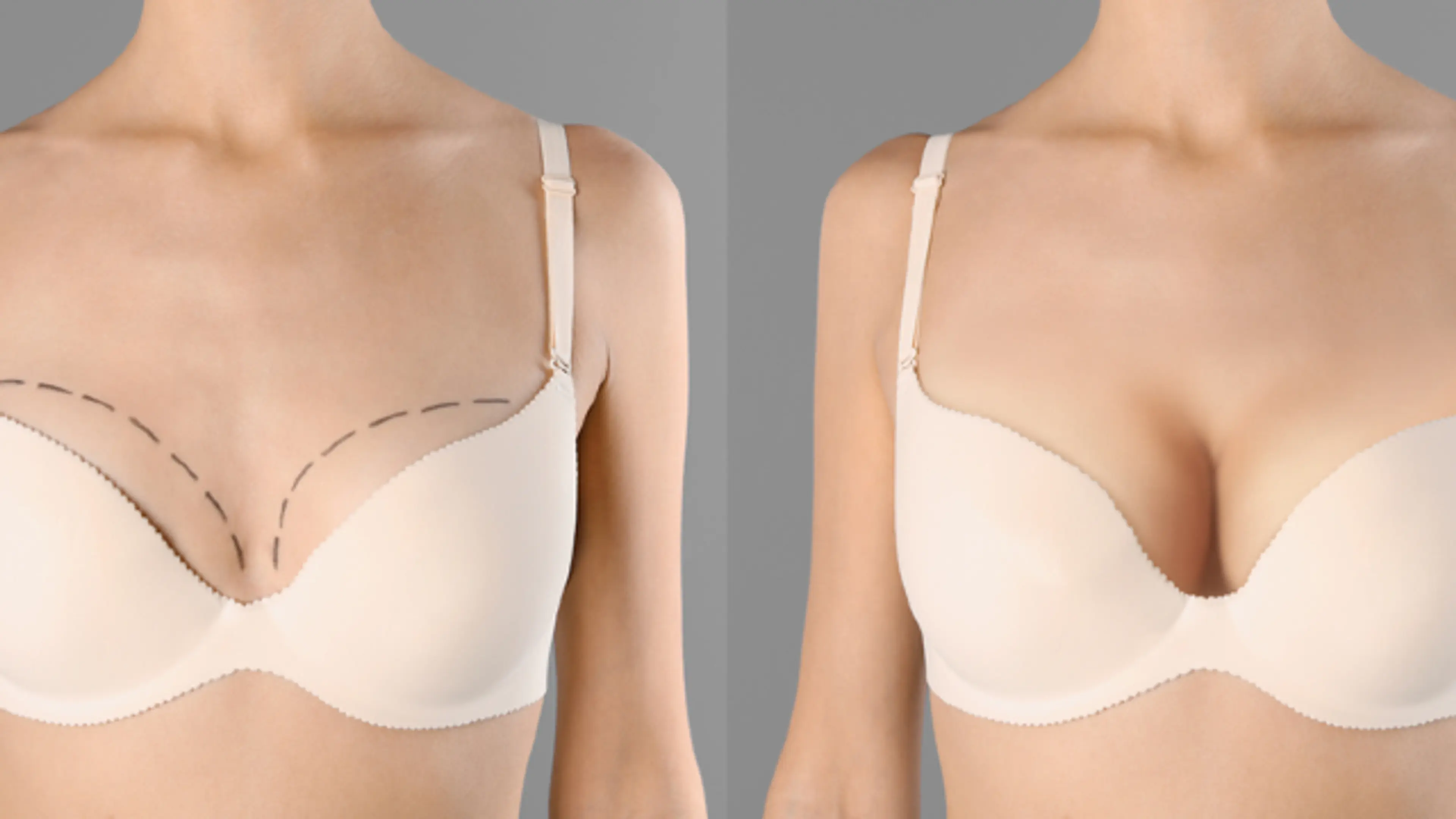
Dual plane placement is the most popular modern approach. The implant sits partially under the pectoral muscle in the upper half and over the muscle in the lower half. This hybrid positioning provides multiple advantages. Upper pole fullness and projection are superior compared to subfascial placement. The muscle coverage in the upper breast reduces visibility of implant edges and provides more natural upper breast contour. Dual plane placement reduces animation deformity, which is the visible distortion that occurs when chest muscles contract during exercise or arm movement. For petite frames like yours, dual plane placement creates balanced proportion without appearing outsized. This is Dite's most frequently recommended approach for natural results.
Subfascial placement positions the implant under the fascia, which is the connective tissue layer separating skin from muscle. The implant sits over the muscle but under the fascial layer. This approach provides good projection and shape with less animation deformity compared to full submuscular placement. Subfascial placement is an alternative option but generally produces slightly less upper pole fullness. It may be recommended if you have specific anatomical considerations or preferences discussed during consultation.
Dr. Lee explains, "Every patient's anatomy is unique. Your ribcage, skin elasticity, existing breast tissue, and aesthetic goals all influence which approach will give you the most natural, proportional result. During your consultation, we will discuss these options in detail and show you examples from other petite framed patients to help you visualize your potential outcome."
Incision placement is a separate but related decision. Three primary incision options exist. Inframammary incision, placed under the breast crease, is the most common approach globally. This placement provides direct visualization of the surgical field and allows precise placement control. The incision heals well and becomes inconspicuous under natural breast sagging. Periareolar incision, placed around the areola, offers excellent visibility but carries slightly higher nipple sensation change risk and may cause future nipple sensation issues. Transaxillary incision, placed in the armpit, creates no breast scar but provides less direct visualization and is technically more challenging. Your consultation will include detailed discussion of these incision options with specific recommendations based on your anatomy.
Dite's approach prioritizes natural looking enhancement over dramatic transformation. Results should be enhancement, not obvious surgery. Proportion and symmetry are paramount. Implant selection is based on your body's specific proportions, not a universal size target applied to all patients. The goal is that you look refreshed, fuller, and more confident, not that you appear operated on.
This philosophy directly aligns with what research driven patients value most. You want people to notice you look amazing, not that you had surgery. Natural-looking breast augmentation results come from understanding aesthetics, not just implant sizing.
Recovery is a process, not an event. Understanding the week by week progression helps you plan your work absence, set realistic activity expectations, and prepare for the swelling and healing that define the first several weeks.
Surgery day involves anesthesia, careful surgical execution, and placement of compression garments that support healing and minimize swelling. You will spend several hours in recovery before returning to your accommodation, supported by clinic staff who monitor your vital signs and comfort level.
Days 2 and 3 bring the initial healing phase. Pain is manageable with prescribed medication, typically rated 4 to 5 out of 10 by most patients. This is not severe pain, but rather discomfort and tightness. Bruising and swelling begin appearing. Your arms have limited mobility, and you should avoid driving or strenuous activity. If drain tubes were placed during surgery, they are typically removed on day 2 or 3. Clinic staff monitor you closely, adjusting medications as needed and ensuring proper healing progress.
Days 4 through 7 mark the peak swelling period, typically occurring around day 3 to 4 after surgery. Increased swelling is completely normal and expected. Bruising is visible but beginning to fade. Light walking is encouraged to prevent blood clots and support circulation. No lifting, pushing, or chest focused activity should occur. Most patients find it easier to rest during this period while staying in Seoul recovery accommodation with clinic support immediately available.
Flying considerations are important for your travel planning. Dr. Lee typically clears patients for flying around day 7 to 10 if no complications have occurred. Blood clot risk is low but compression garments during flight are recommended. Most patients feel comfortable flying by day 10, though some prefer waiting until day 12 to 14 to minimize any post flight swelling increase. This decision is made individually during your recovery stay based on your healing progress.
Week 2 brings noticeable swelling reduction. Bruising is fading significantly. Light cardio including walking and stationary biking becomes possible if you experience no pain. Chest focused exercises and heavy lifting remain restricted. Many patients return to desk work this week, though some prefer waiting another week if their job involves arm or upper body movement. Numbness or tingling around incisions is normal during this phase and typically resolves within 4 to 8 weeks.
Week 3 continues the healing trajectory. Swelling reduces significantly, and you can typically begin light upper body stretching. Still no heavy lifting or chest focused exercises. Most patients feel quite normal in daily activities and can manage light work responsibilities comfortably.
Week 4 allows modified gym routines, though chest exercises remain avoided. You can typically wear regular bras, which feels like a major milestone for most patients. Swelling is 50 to 60 percent resolved. Results are becoming increasingly visible as swelling subsides. You will begin to see the shape and projection your implants provide.
Important perspective: Everyone heals at a different rate. This timeline represents typical progression but not a universal path. Your individual healing may be faster or require more conservative pacing based on your body's response.
Period | Swelling Status | Activity Level | Work/Exercise |
|---|---|---|---|
Days 1–3 | Peak swelling begins | Minimal movement | Rest only |
Days 4–7 | Maximum swelling | Light walking only | No exercise |
Week 2 | Swelling decreasing | Light activity, walking | Light cardio possible |
Week 3 | Moderate swelling | Increased movement | Stretching permitted |
Week 4 | 50–60% resolved | Most normal activities | Modified gym routines |
Weeks 5–6 | 75–80% resolved | Nearly all activities | Most exercises except chest |
Month 2+ | 80–90% resolved | Full activity | All exercises permitted |
Month 2 brings dramatic visible results. Swelling is 80 to 90 percent resolved. You can typically resume all chest exercises and athletic activities without restriction. Results will continue improving as any remaining swelling resolves completely.
Month 3 and beyond marks the settling phase. Results are considered final as implants have settled into their permanent position. Tissues have adapted to the implants. Continued subtle improvement is possible as remaining swelling resolves over subsequent months.
The 12 month mark is when final aesthetic judgment should be made. Implants have fully settled. Any late swelling is completely resolved. Results are stable and represent your true outcome. Many patients report that they continue noticing subtle improvements even through month 6 as tissues continue adapting.
Dr. Lee shares, "Recovery is not linear. You will have good days and days where swelling seems to increase. This is completely normal. By month 3, you will see a dramatic difference. By month 6, your results will be stable. Most patients tell me the best part about recovery is watching their results emerge and feeling more confident each week."
Cost transparency is critical for your decision making. Vague pricing creates suspicion. Clear, itemized breakdown builds confidence. Here is exactly what breast augmentation Seoul costs and what that investment includes.
The surgical package at Dite Plastic Surgery Clinic is comprehensive and all inclusive. Understanding each component eliminates surprises and allows accurate budget planning.
Surgeon fee ranges from $4,500 to $6,500 USD depending on complexity and specific technique requirements. Dr. Lee's standard breast augmentation sits at the higher end of this range, reflecting his experience and the complexity often involved in achieving natural results on petite frames. This fee is comparable to top surgeons in New York or Los Angeles, but represents far superior value when combined with Dite's complete inclusion model.
Anesthesia costs between $1,000 and $1,200 and is fully included in your surgical package. This is important because many US clinics bill anesthesia separately, adding hidden costs to the final bill. At Dite, anesthesia is transparent and included.
Operating room and facility costs of $1,500 to $2,000 are included, covering facility rental, equipment, and facility staff. This transparent inclusion prevents the surprise facility fees that often appear on US surgical bills.
Surgical garments, which are high quality compression bras, cost $250 to $350 and are provided by the clinic as part of your package. These specialized garments are critical to your recovery and are not additional purchases.
Post operative medications and antibiotics, typically costing $200 to $300, are included for your first month of recovery. This covers pain management, antibiotics, anti-inflammatory medications, and other pharmaceuticals needed during initial healing.
Pre operative imaging and consultation are included with no separate charges. Virtual consultation with Dr. Lee is complimentary. Any imaging needed to assess your candidacy is included in your total package.
Virtual follow up appointments at 6 weeks, 3 months, and 6 months are included. Direct access to Dr. Lee for these virtual check-ins is included, not some coordinator-based follow-up service.
Total surgical cost ranges from $7,500 to $10,500 USD all-in. Most patients fall in the $8,500 to $9,500 range depending on specific implant selection and any complexity factors identified during consultation. This represents your complete surgical investment with no surprise charges.
Cost Item | Price Range | Included? |
|---|---|---|
Surgeon fee | $4,500–$6,500 | Yes |
Anesthesia | $1,000–$1,200 | Yes |
Facility/OR | $1,500–$2,000 | Yes |
Surgical garments | $250–$350 | Yes |
Medications (1 month) | $200–$300 | Yes |
Pre-op imaging/consultation | Included | Yes |
Virtual follow-up (6 weeks, 3 months, 6 months) | Included | Yes |
Total Surgical Cost | $7,500–$10,500 | All-in |
Additional compression garments after your first month are optional purchases if desired. Most patients do not need them, as swelling resolves sufficiently by month 2 that regular bras provide adequate support.
Any additional medications beyond standard protocol are your responsibility. Some patients request specific pain medications or supplements; these would be additional costs.
Revision surgery, if needed, involves separate consultation and quote. Dite offers revision procedures at favorable rates for international patients, but these are not included in your initial surgical cost.
Your complete trip investment includes more than just surgery. Flight, accommodation, and daily expenses determine your total out of pocket cost for the entire journey.
Roundtrip flights from major US cities to Seoul range from $800 to $1,200 in economy or premium economy seating. Los Angeles to Seoul flights average $900 to $1,100. New York to Seoul flights average $1,000 to $1,300. Chicago flights average $950 to $1,200. These prices fluctuate seasonally, so booking 6 to 8 weeks in advance typically provides better pricing than last-minute bookings.
Accommodation for your 10 day recovery stay, including at least 5 days post-op when travel is not advisable, ranges from $800 to $1,500. Mid-range hotels in Seoul with suitable recovery amenities cost $80 to $150 per night. Serviced apartments, which offer kitchen facilities and living space for recovery, cost $100 to $200 per night. Many patients prefer serviced apartments because they allow meal preparation and a more home like environment during recovery. Dite provides accommodation recommendations and can assist with booking arrangements.
Meals during your 10 day stay cost $400 to $600. Street food and casual dining in Seoul are affordable, with quality meals available for $8 to $15 per person. Fine dining is optional and purely your choice. Most patients enjoy exploring Seoul's food scene while recovering.
Ground transportation including airport transfers, clinic visits, and exploration costs $100 to $200. Airport limousine services cost $50 to $70 roundtrip. Taxis are inexpensive, typically $5 to $10 per ride within Seoul. Public transportation is even cheaper at $1 to $2 per trip.
Miscellaneous expenses including tips, SIM card purchase for local phone service, activities, and contingency needs average $100 to $200.
The financial comparison is striking and motivates many discerning patients to choose breast augmentation Seoul.
Complete cost for breast augmentation Seoul including surgery and entire trip: $9,600 to $13,700 USD. For most patients with moderate implant sizes and straightforward cases, the realistic total is $11,000 to $12,500 USD.
Comparable cost in US major cities typically ranges from $15,000 to $22,000 for surgery alone, not including flights, accommodation, or time away from work. Los Angeles top surgeons charge $12,000 to $18,000 for surgery. New York surgeons charge $13,000 to $20,000. Miami surgeons charge $11,000 to $16,000. These prices cover surgery only. If you require flight travel to access a desired surgeon, add another $400 to $1,000. If you stay overnight in a hotel, add additional accommodation costs.
Quality is equivalent or superior to top US surgeons. Dr. Lee's experience, volume, and academic contributions are unmatched by most US surgeons. Your results will be comparable to or better than what you would receive from a top surgeon in any major US city.
Transparency distinguishes Dite's pricing model. Everything is disclosed upfront. You know your complete investment before committing. Hidden fees do not appear after surgery.
This investment is not a budget choice. It is an economically intelligent choice informed by quality equivalence and cost structure differences between countries.
Dr. Lee states, "I am often asked if there is a quality compromise to the lower cost. The answer is no. Our pricing reflects our cost structure, not our quality. I perform 400 plus surgeries annually, more than most top surgeons in the US. The combination of volume expertise, transparent pricing, and no defensive medicine overhead creates genuine savings, which we pass directly to our patients."
Visual proof of natural, proportional results is critical to your decision. Before and after photography demonstrates what is achievable on frames like yours and shows results at various stages of healing.
Natural enhancement is distinct from dramatic transformation. The distinction is fundamental to understanding what Dite prioritizes in its aesthetic approach.
Natural enhancement means results that are proportional to your frame, that fit your existing body in a way that looks cohesive, and that could plausibly appear natural. The enhancement should be noticeable to people who know you, but subtle enough that strangers do not immediately recognize surgical augmentation.
Avoiding the obviously augmented appearance requires restraint in implant selection, precise placement technique, and understanding of proportion. Results that appear overly rounded, with obvious bulging, or outsized for the patient's frame announce their surgical origin. Animation deformity, visible distortion when chest muscles contract, further signals augmentation. Natural results avoid these telltale signs.
Petite frame consideration is essential for your result expectations. Your frame, typically 5 feet 2 inches to 5 feet 4 inches in height with an athletic build, pairs optimally with moderate implants in the 300 to 375 cubic centimeter range. This size range provides proportional fullness without appearing outsized on a smaller frame. The goal is fullness and projection that appear natural on your specific body, not universal sizing applied to all patients.
How to evaluate results accurately: Look at the implant placement relative to your ribcage, breast crease, and overall body proportions. Does the enhancement blend seamlessly or stand out as clearly artificial? Does the implant size appear proportional to your shoulder width and ribcage? Does the projection appear natural or exaggerated? Dite's results consistently demonstrate this proportional, integrated aesthetic.
Dite's result aesthetic reflects Dr. Lee's philosophy of natural enhancement. Common feedback from patients is "People cannot quite tell if it is natural or not. They just know I look great." This is the gold standard outcome.
Understanding the result progression eliminates dissatisfaction born from evaluating results too early. Results are not immediately final. They evolve substantially over the first 12 months.
Immediately post-op, implants sit high due to swelling and appear larger and rounder than final results will be. This is not your final result. Your breast tissues have swelling and trauma from surgery. Implants have not settled into their permanent position. Many patients feel dismayed at immediate post-op appearance because results look overdone. This is completely normal and temporary.
At 2 weeks post-op, swelling begins resolving meaningfully. Implants start settling downward as swelling decreases and tissues adapt. Results begin looking more natural, though still slightly larger and higher than final result. Bruising is fading, and you can see shape emerging.
At 6 weeks post-op, major change is visible. Implants have settled considerably. Swelling is 60 to 70 percent resolved. Results look increasingly natural and proportional. Shape and projection are becoming clear. This is often the point where patients feel genuine satisfaction with their results.
At 3 months post-op, results are very close to final. Swelling is 90 percent resolved. Implants have settled into their natural position. Results look soft and natural rather than overly rounded. This is often when patients feel truly confident in their results.
At 6 months post-op, final results are stable. Implants have fully settled. Tissues have completely adapted. This is considered the standard reference point for evaluating final aesthetic outcome.
At 12 months post-op, results are completely stable. Continued tissue remodeling may provide even subtler improvements. Most patients report that their results continue looking even better subtly through year one as tissues continue adapting around implants.
Critical perspective: Patience through the settling process is essential to satisfaction. Most dissatisfaction comes from evaluating results too early, before settling and swelling resolution have occurred. Many patients who felt dissatisfied at 6 weeks felt completely satisfied by 12 weeks once they understood this natural progression.
Will people know I had surgery? Most patients report that people notice they look amazing but do not assume surgical augmentation. Compliments typically focus on your appearance improving, your confidence, or you looking fit, not on obviously augmented breasts. Natural results maintain this ambiguity.
Will results look the same in different bras, swimwear, and activewear? Yes, results remain consistent across different clothing and are particularly evident in form fitting options like swimwear and activewear. Professional bra fitting is essential to ensure proper support and flattering appearance. Many patients invest in several quality bras after recovery to optimize their appearance across different contexts.
Can I see visible scarring around incision line areas? Minimal scarring is typical, particularly with inframammary incisions placed under the breast crease. Scars fade dramatically over 12 months as collagen remodels. By 12 months, most incision scars are barely visible without deliberate examination. Some patients have nearly invisible scars by 18 months.
Will my nipple sensation change? Temporary numbness is common, occurring in 20 to 30 percent of patients. Typically, sensation gradually returns over 3 to 6 months as nerves recover from surgical trauma. Permanent numbness is rare, occurring in less than 2 percent of cases. Full sensation usually returns to normal by 6 to 12 months.
Dr. Lee reflects, "The most common compliment I hear from my patients is: 'Everyone says I look amazing, but they do not think it is surgery. They think I just got fitter or got a good bra.' That is exactly what natural breast augmentation is. You want people to notice you look better, not that you had surgery. This is what Dite focuses on: results that enhance your beauty, not announce your procedure."
Risk consciousness is intelligent, not excessive. Evidence based understanding of complication rates and management protocols is essential for informed decision making. Dite believes in transparent discussion of what can go wrong and how complications are managed.
Complications in breast augmentation are real but manageable. Global data on complication rates provides context for understanding your individual risk.
Capsular contracture occurs when the body's immune response causes scar tissue around the implant to thicken, potentially creating firmness or distortion. Rates vary in literature but typically occur in 2 to 5 percent of breast augmentation cases globally. Rates are similar in Korea and the US, indicating that this complication is biology related, not geography or technique related. If capsular contracture develops, it can be managed through non-surgical treatment in early stages or through revision surgery if needed.
Infection occurs in less than 1 percent of breast augmentation cases. Prevented through sterile surgical technique, prophylactic antibiotics, and proper post-operative care. Dite's protocols exceed standard infection prevention measures.
Implant rupture is exceptionally rare with modern implants. Modern rupture rates are less than 1 percent at 10 years, and modern gel implants will not leak into your body if rupture occurs due to cohesive gel technology. The implant will simply no longer hold its shape, but no harmful leakage occurs.
Asymmetry can occur if one implant settles differently than the other or if pre-existing asymmetry was not perfectly corrected. Minor asymmetry is normal and common. Major asymmetry affecting appearance occurs in less than 1 percent of cases and can be corrected through revision.
Changes in sensation around the incision and nipple occur temporarily in many patients. Temporary numbness or tingling happens in 20 to 30 percent of cases and typically resolves within 3 to 6 months. Permanent sensation changes occur in less than 2 percent of cases.
Animation deformity, visible distortion when chest muscles contract, can occur with certain placement techniques. Dual-plane placement, which Dite commonly recommends, significantly reduces this risk.
Hematoma or seroma, which are fluid collections around the implant, occur in less than 2 percent of cases. If these develop, they are managed through drainage if needed. They do not represent surgical failure, but rather a normal response that requires management.
Safety is not accidental. It results from deliberate protocols, experienced execution, and continuous monitoring.
Sterile surgical environment: Dite's operating room meets international accreditation standards for surgical facilities. Safety standards are equivalent to US hospital surgical centers. Equipment is modern and regularly maintained. Sterility protocols exceed standard practice.
Antibiotic protocol: Standard prophylactic antibiotics are given during surgery. Patient specific protocols are developed based on individual medical history, allergies, or risk factors. Your antibiotic regimen is customized to your needs.
Anesthesia monitoring: Continuous vital sign monitoring occurs throughout your surgery. Anesthesiologists monitor heart rate, blood oxygen, blood pressure, and other critical measures. Safety equipment for managing any anesthesia emergency is immediately available.
Technique precision: Dr. Lee's high volume and specialization in breast surgery reduce complication rates. Surgeons who have handled thousands of cases develop refined technique and pattern recognition that reduces errors.
Post-op monitoring: During your recovery stay in Seoul, clinic staff monitor you closely at multiple daily check-ins. Any emerging concerns are addressed immediately rather than waiting for issues to escalate. This intensive monitoring during the critical initial healing phase prevents many potential complications.
Virtual follow-up protocol: After returning to the US, you have virtual check-ins at 6 weeks, 3 months, and 6 months. Dr. Lee personally reviews your progress. Any emerging concerns are identified and addressed early.
Emergency protocol: If complications arise after return to the US, Dite coordinates with your local physicians. Dr. Lee is available for consultation regarding your care. You never feel abandoned as an international patient.
Complications sometimes occur despite optimal technique and protocols. Dite's approach to revision is transparent and patient-centered.
If complications occur, they are covered under warranty for the first year. Revision procedures are discussed, and separate quotes are provided based on the specific revision needed. Dite does not hide behind warranty exclusions or surprise fees for revisions.
Capsular contracture revision, if contracture develops, has multiple treatment options. Capsulotomy (stretching scar tissue) is attempted first. If more aggressive intervention is needed, capsulectomy (scar tissue removal) can be performed. Revision implant replacement may also be done. Revision surgery is typically simpler than primary surgery because anatomical dissection is already complete.
Asymmetry correction, if significant asymmetry develops, can be corrected through adjusted implant sizing or placement. Revision techniques are well-established and successful in restoring symmetry.
Open communication is foundational to Dite's complication management. Patient concerns are never dismissed. Your experience is validated. Solutions are prioritized.
Virtual solution-focused approach: Most follow-up and decision-making regarding potential complications is handled virtually, accommodating international patient convenience. You do not need to travel back to Seoul for routine revision consultations or follow-up.
Dr. Lee assures, "Complications in breast augmentation are rare, and when they occur, they are manageable. My goal is to give you results you love. If that means a revision, we handle it. I am invested in your satisfaction, and that means being fully available to address any concern that arises."
Differentiation in healthcare means choosing a provider whose values, expertise, and approach align with your priorities. Dite distinguishes itself through sustained academic excellence, specialized focus, and demonstrated commitment to international patient satisfaction.
Years of experience matter because they translate to refined technique, better judgment, and deeper understanding of how to manage patient variation and complexity.
Dr. Lee brings 20 plus years in plastic surgery with specialization in breast and body procedures. This is not a generalist surgeon dividing time across many specialties. This is someone who has dedicated a career to becoming expert in breast enhancement specifically.
Total procedures performed: 400 plus breast augmentations annually, which means approximately 5,000 plus procedures over his career. This volume creates pattern recognition and technique refinement unmatched in most US practices. Every variation of anatomy, desired outcome, and complication scenario has been encountered and managed skillfully.
Board certifications confirm training rigor. Dr. Lee is fully board certified in plastic surgery per Korean standards, which are equivalent to US standards. Certification requires passing rigorous exams, proving clinical competency, and demonstrating ongoing professional development.
Academic affiliations signal recognition and contribution beyond clinical practice. Dr. Lee holds clinical instructor positions at Samsung Hospital, one of Seoul's premier medical institutions. He holds adjunct professor roles at international institutions, indicating he is teaching other surgeons. These roles are not ceremonial. They reflect genuine expertise and contributions to surgical education.
Professional memberships demonstrate engagement with peer networks and ongoing professional development. Active membership in the Korean Society of Plastic and Reconstructive Surgery and multiple international plastic surgery societies indicates collaboration with global experts and awareness of international best practices.
Publication record demonstrates intellectual contribution to the field. Dr. Lee's research contributions to plastic surgery literature indicate ongoing innovation and refinement of technique based on outcome data. Surgeons who publish are constantly testing their assumptions and improving their approaches.
Teaching and mentoring represent additional expertise signals. Training other surgeons requires mastery that transcends technical execution. Teaching demands articulating why certain decisions are made, how to think through variations, and how to troubleshoot complications. These teaching responsibilities elevate and refine expertise.
Specialization focuses expertise in a way that general practice cannot match. Dite is a body-focused clinic, not a general aesthetic clinic attempting breast, facial, and body procedures with equal emphasis.
This body-focused specialization means breast and body contouring procedures represent the core expertise. Facial procedures are secondary. Breast augmentation specifically has been performed thousands of times by the primary surgeon. Muscle memory and pattern recognition are deep.
Academic leadership distinguishes Dite from production-line clinics. Dite is recognized globally for contributions to plastic surgery research and innovation in breast and body procedures. This reputation comes from presentations at international conferences, published research, and development of novel techniques that improve outcomes.
Global reach provides additional credibility signal. Patients travel from 30 plus countries to Dite, including substantial numbers from the United States and Canada. This international patient base reflects confidence in quality and results across cultural boundaries and aesthetic preferences. If the clinic were merely competent, it would serve local patients. International travel from the US indicates exceptional reputation.
Technique innovation demonstrates commitment to continuous improvement. Rather than repeating the same technique year after year, Dite continuously refines approaches based on outcome data and international collaboration. Every patient benefits from decades of collective global knowledge.
Quality standards are maintained despite high volume. A common assumption is that high volume clinics compromise individual attention for production efficiency. Dite disproves this assumption. High-volume practice allows operational efficiency while maintaining premium care standards and individual attention to each patient.
Results-focused decision making ensures every clinical choice prioritizes your aesthetic outcome and satisfaction. This patient-centered orientation is evident in how Dite approaches consultation, technique selection, implant choice, and follow-up care.
International patient logistics are complex. Dite's structured support system removes friction and uncertainty from the process.
English-speaking team means all patient-facing communication occurs in your native language. No translation misunderstandings. No uncertainty about what Dr. Lee recommends. All instructions and discussions are clear and detailed.
Dedicated patient coordinator is assigned to each international patient. This coordinator serves as your single point of contact for all logistical coordination and communication. Rather than navigating multiple staff members, you have one person who understands your timeline, preferences, and specific needs.
Pre-op support begins immediately after consultation. Virtual guidance explains pre-operative instructions. Supply lists detail what to bring or purchase before surgery. Accommodation recommendations address where to stay during recovery. Travel logistics are coordinated. You arrive prepared and organized.
In-clinic support provides security during your most vulnerable period. All instructions and post-operative care are provided in English. Staff are available 24/7 during your stay. Any concerns, complications, or questions are addressed immediately. You are never left confused or unsupported during those critical initial recovery days.
Post-return coordination maintains your connection after flying home. Virtual follow-up appointments at 6 weeks, 3 months, and 6 months keep you connected with Dr. Lee. If complications arise, coordination with your local US physicians is facilitated. You never feel like an international patient who is responsible for their own follow-up.
24/7 contact availability means help is genuinely available in emergencies. Contact information is provided for reaching Dite immediately if urgent concerns arise after your return to the US. Time zone differences are accommodated.
Language accessibility is expanded beyond English if needed. While English and Korean are primary languages, translation services are available to ensure clear communication regardless of language preference.
Decision moves to action through clear process steps. Uncertainty about how to proceed is a common barrier. Dite removes friction from the booking process.
Free virtual consultation is available to all prospective patients. There is no cost or obligation to explore whether breast augmentation Seoul is right for you.
What is discussed during consultation: Your aesthetic goals are explored in detail. Body type assessment evaluates your frame, existing breast anatomy, and how implants would appear proportionally. Implant options are reviewed with specific recommendations for your anatomy. Technique recommendations are explained with visual examples of results on similar frames. Timeline options are discussed, addressing when you prefer to schedule surgery. Cost breakdown is provided with complete clarity on all expenses.
Duration: 30 to 45 minutes allows adequate time for comprehensive discussion. You are not rushed through a assembly-line consultation. Time is allocated to answer all questions thoroughly.
Your preparation for consultation: Have clear photos of your desired aesthetic. Pinterest boards with before and after photos you like are helpful. Prepare your questions in advance. Ensure privacy for discussion so you can speak openly.
Outcome: Clear recommendation from Dr. Lee regarding optimal approach for your anatomy. Detailed quote specifying surgical cost, implant choice, and all included services. Clear next steps if you decide to proceed.
After consultation, you receive your personalized treatment plan and quote. This is when decision occurs.
After consultation, you receive detailed quote, procedure plan, and timeline options. You have everything needed to make an informed decision. Take time to decide. There is no pressure. Dite accommodates your timeline.
Booking the procedure: Once you decide to proceed, deposit payment secures your surgery date. Your appointment is reserved. Your surgery date is locked in.
Payment options provide flexibility. Credit card payments are accepted internationally. Wire transfer is available if you prefer. Payment plans are available if you need to spread payments over time.
Pre-op planning begins immediately after booking. You receive a comprehensive pre-operative checklist. Medical clearance requirements are specified. Travel recommendations address flights, timing, and preparation. Accommodation is arranged. Pre-operative appointments are scheduled.
Coordination intensive: Your dedicated patient coordinator manages all logistics. Flights are booked. Accommodation is arranged. Pre-operative appointments are scheduled. Transportation is organized. Every detail is handled so you can focus on preparation and excitement rather than logistics.
Direct contact lines are readily available to initiate your consultation.
The clinic operates throughout the week with consistent and convenient hours to accommodate patients’ schedules. From Monday to Friday, services are available from 10:00 AM to 7:00 PM, ensuring ample time for consultations and treatments during regular working days. On Saturdays, the clinic remains open from 10:00 AM to 5:00 PM, offering continued access for those who prefer weekend appointments.
International patient line: Available specifically for international patient scheduling and time zone accommodation.
Breast augmentation Seoul at Dite Plastic Surgery Clinic represents a convergence of world class surgical expertise, transparent pricing, natural aesthetic results, and comprehensive international patient support. Dr. Jun Wook Lee's 20 plus years of experience and 400 plus annual procedures create a depth of knowledge unmatched in most US practices. The complete cost of $7,500 to $10,500 for surgery plus $2,000 to $3,500 for travel delivers equivalent or superior quality compared to US major cities at 40 to 50 percent lower total cost. Recovery is manageable with clear week-by-week progression. Results are natural and proportional. Your entire journey is supported by a clinic specialized in body-focused procedures with global academic leadership.
Founder and Lead Surgeon, Dite Plastic Surgery Clinic, Seoul, South Korea
Dr. Jun Wook Lee brings 20 plus years of specialized experience in breast and body contouring procedures. He performs 400 plus breast augmentations annually, reflecting a career total exceeding 5,000 procedures. His board certification in plastic surgery meets rigorous Korean standards equivalent to US certification standards. Dr. Lee holds clinical instructor positions at Samsung Hospital, one of Seoul's premier medical institutions, and adjunct professor roles at international plastic surgery institutions. He is an active member of the Korean Society of Plastic and Reconstructive Surgery and the International Society of Aesthetic Plastic Surgeons. His published research contributions demonstrate ongoing commitment to surgical innovation and outcome improvement. Dite Plastic Surgery Clinic specializes in body-focused surgical procedures including breast augmentation, body contouring, and facial rejuvenation, with particular expertise in achieving natural aesthetic results on diverse patient frames.
For consultations or questions: