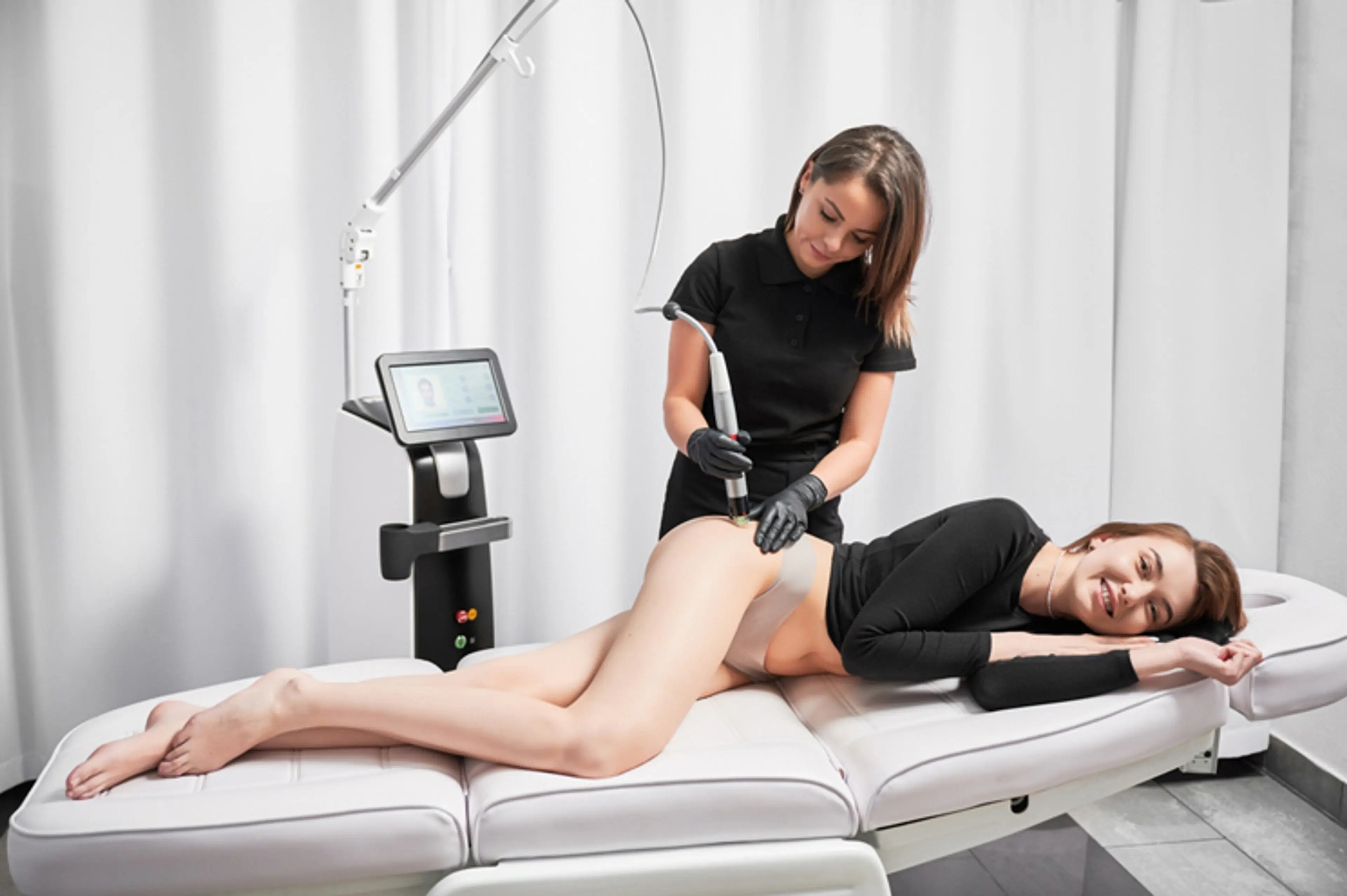
A decade ago, hip augmentation was rarely part of the conversation. Today, it’s at the center of a growing trend — not because women are chasing extreme curves, but because more are recognizing the subtle power of balanced proportions. In body-focused clinics across the world, especially in Seoul’s Gangnam district, women are turning to hip implant and hip lifting procedures to refine their silhouettes in ways that exercise alone often can’t.
But this isn’t about following fads. It’s about owning your shape with precision.
As a body contouring clinic specializing in refined, natural outcomes, we at Dite Plastic Surgery see this shift firsthand — and it’s rooted in more than aesthetics. For many women, the decision to reshape their hips is a thoughtful, empowering one.
The Rise of the Hip-Centered Silhouette
the-rise-of-the-hip-centered-silhouetteIn Korean beauty culture — known for its elegance and subtlety — curves are never meant to be loud. They are meant to flow. Think of the body as a sculpture: every line matters, and the transitions between areas (waist to hip, hip to thigh) are just as important as the individual zones themselves.
A Matter of Balance, Not Size
a-matter-of-balance-not-sizeThe increasing interest in hip augmentation isn’t about making hips larger — it’s about making them proportional.
At Dite, we often hear concerns like:
“My waist is narrow, but my hips don’t follow through.”
“I work out, but no matter how much I train my glutes, I still have straight hips.”
“Clothes just don’t fit right — they either pinch at the waist or hang loose at the hips.”
These are not superficial frustrations. They’re signs of a structural imbalance between the pelvis, fat distribution, and muscular development — most of which is shaped by genetics.
Hip implants and lifting techniques offer a way to re-sculpt the lower body with long-lasting, anatomical accuracy.
What Are Hip Implants and Hip Lifting Procedures?
what-are-hip-implants-and-hip-lifting-proceduresLet’s clarify what these procedures actually do — because many patients confuse them with buttock surgery or think it’s all about volume.
Hip Implants: Adding Soft Contour Where Genetics Fall Short
hip-implants:-adding-soft-contour-where-genetics-fall-shortHip implants are silicone-based prosthetics placed under the soft tissue of the lateral hip (side of the pelvis). They’re shaped to blend naturally with the outer curve of the hip, often extending from the top of the buttock down toward the upper thigh.
These implants are ideal for patients who:
Have naturally flat or square hips
Lack sufficient fat for grafting
Want long-term, stable volume enhancement
At Dite, we use high-cohesive, anatomical implants that integrate smoothly with your body’s natural movement — offering a soft, sculpted look that feels authentic.
Hip Lifting: Contouring, Not Just Elevating
hip-lifting:-contouring-not-just-elevatingHip lifting isn’t about pulling tissue upwards like a facelift. Instead, it typically combines:
Fat grafting or liposuction to smooth contours
Tissue repositioning to correct hip dips
Skin tightening to address sag or stretch
Some patients opt for lifting to refine post-weight loss changes, postpartum shifts, or mild sagging from aging — especially when combined with other body contouring procedures.
Why Now? The Top Reasons Women Are Choosing These Procedures
why-now-the-top-reasons-women-are-choosing-these-procedures1. Curves as a Sign of Youth and Vitality
1.-curves-as-a-sign-of-youth-and-vitalityIn Korean aesthetics, subtle curves at the hip are associated with youthfulness. As we age, soft tissue volume decreases and skin elasticity weakens. For many women in their 30s, 40s, and beyond, hip shaping helps restore what time has softened — giving the body a more “lifted” energy without looking artificial.
2. The Hourglass Ideal Is No Longer Just About the Waist
2.-the-hourglass-ideal-is-no-longer-just-about-the-waistWaist-focused surgeries like liposuction or abdominal etching often need a complementary counterpart. A slim waist alone can look severe or “boxy” if the hips don’t taper outward naturally.
By widening the lateral silhouette slightly — even by 1–2 cm — we create a more graceful transition from upper to lower body. The result isn’t just curvier. It’s more fluid, more balanced, and often more youthful.
What many patients don’t realize is: sometimes the missing piece in their body transformation isn’t at the waist or thighs — it’s the hips.
Cultural Influences: Not Just K-Pop, But Proportional Awareness
cultural-influences:-not-just-k-pop-but-proportional-awarenessIt’s easy to attribute body trends to pop culture. Yes, global beauty icons have played a role in popularizing curvier silhouettes. But in Korea — where aesthetic refinement is highly valued — the decision to get hip surgery is rarely impulsive.
Instead, patients are:
Studying proportions on their own photos
Comparing fit across different clothing styles
Seeking natural results that make their movement look more feminine, not exaggerated
At Dite, we often hear:
“I want to look like myself — just with better lines.”
Body Type Limitations: When Hips Just Don’t Respond
body-type-limitations:-when-hips-just-don't-respond
Some women are naturally straight-figured, with narrow iliac crests (hip bones) and minimal fat around the pelvis. For this group, no amount of exercise can add width at the outer hips.
Others may carry fat in the lower abdomen or thighs, but still have hip dips — indentations between the hip bone and upper thigh. This creates a visual “break” in the silhouette, disrupting the flow of the lower body.
Hip implants and fat grafting can:
These are structural corrections — not just aesthetic touches.
Surgical Precision and Planning: Why Technique Matters
surgical-precision-and-planning:-why-technique-mattersAt Dite Plastic Surgery, we emphasize aesthetic logic — the principles that make a body look harmonious, not just enhanced.
That means:
Preoperative 3D scanning to simulate outcomes
Custom implant sizing and shaping
Combination approaches (e.g., hip implants + liposuction for contrast)
Meticulous recovery planning to minimize swelling and shift
We also use high-frequency devices during surgery to reduce bleeding and swelling — allowing for more precise implant placement and smoother healing.
Recovery: What to Expect (and What Not to Rush)
recovery:-what-to-expect-(and-what-not-to-rush)This is not a lunchtime procedure. While recovery is manageable, it must be taken seriously.
Typical recovery journey:
Week 1–2: Moderate swelling, some tightness when sitting or walking
Week 3–4: Bruising fades, shape begins to settle
Month 2–3: Full mobility returns, results become visible
Month 6+: Final contour stabilizes
We support patients with:
Custom compression garments
Post-op lymphatic massage
Laser-assisted recovery tools
Following these steps can dramatically improve not just results, but long-term softness and symmetry.
Is It Right for You?
is-it-right-for-you
Hip implants and lifting are not for everyone. But if you’ve felt that your silhouette doesn’t reflect your inner sense of elegance or femininity — it might be worth exploring.
You may be a good candidate if you:
Have a naturally narrow or flat hip profile
Have visible hip dips or lack lateral volume
Want permanent shape enhancement with minimal maintenance
Are in good health and have realistic expectations
On the other hand, we advise caution if:
You're seeking exaggerated or unstable proportions
You have major health conditions affecting healing
You expect surgery to fix self-esteem without broader support
Final Thought: It’s About More Than a Curve
final-thought:-it's-about-more-than-a-curveFor many of our patients, hip contouring isn’t about standing out — it’s about finally feeling aligned. When your body flows the way you imagine it should, everything shifts: your posture, your movement, even how you carry emotion in your frame.
And sometimes, that tiny adjustment — a few centimeters of contour, a smoother transition line — makes all the difference.
Thinking About Refining Your Silhouette?
thinking-about-refining-your-silhouetteAt Dite Plastic Surgery, we specialize in elegant, customized body contouring — from hybrid breast augmentation to lower body sculpting and hip reshaping. Dr. Jun Wook Lee brings over 20 years of surgical experience to every case, blending technical mastery with a designer’s eye for proportion.
If you're considering subtle enhancement or need help understanding what’s possible for your body, book a private consultation. We’ll walk you through every detail, from 3D simulation to long-term care — because real confidence is sculpted, not rushed.